Search intent is one of the most important factors in creating an effective SEO strategy for a hair salon. It refers to the reason behind a person’s search query and what they actually want to find when they use Google or another search engine. Understanding this intent allows salons to create useful content, optimize service pages, and appear for searches that are more likely to generate genuine enquiries and appointments.
For example, someone searching for “hair salon near me” may be ready to book an appointment, while a person searching for “best haircut for round face” may still be researching. Both searches are valuable, but they require different types of content. A strong strategy connects the right page with the right search intent.
What Is Search Intent in Hair Salon SEO?
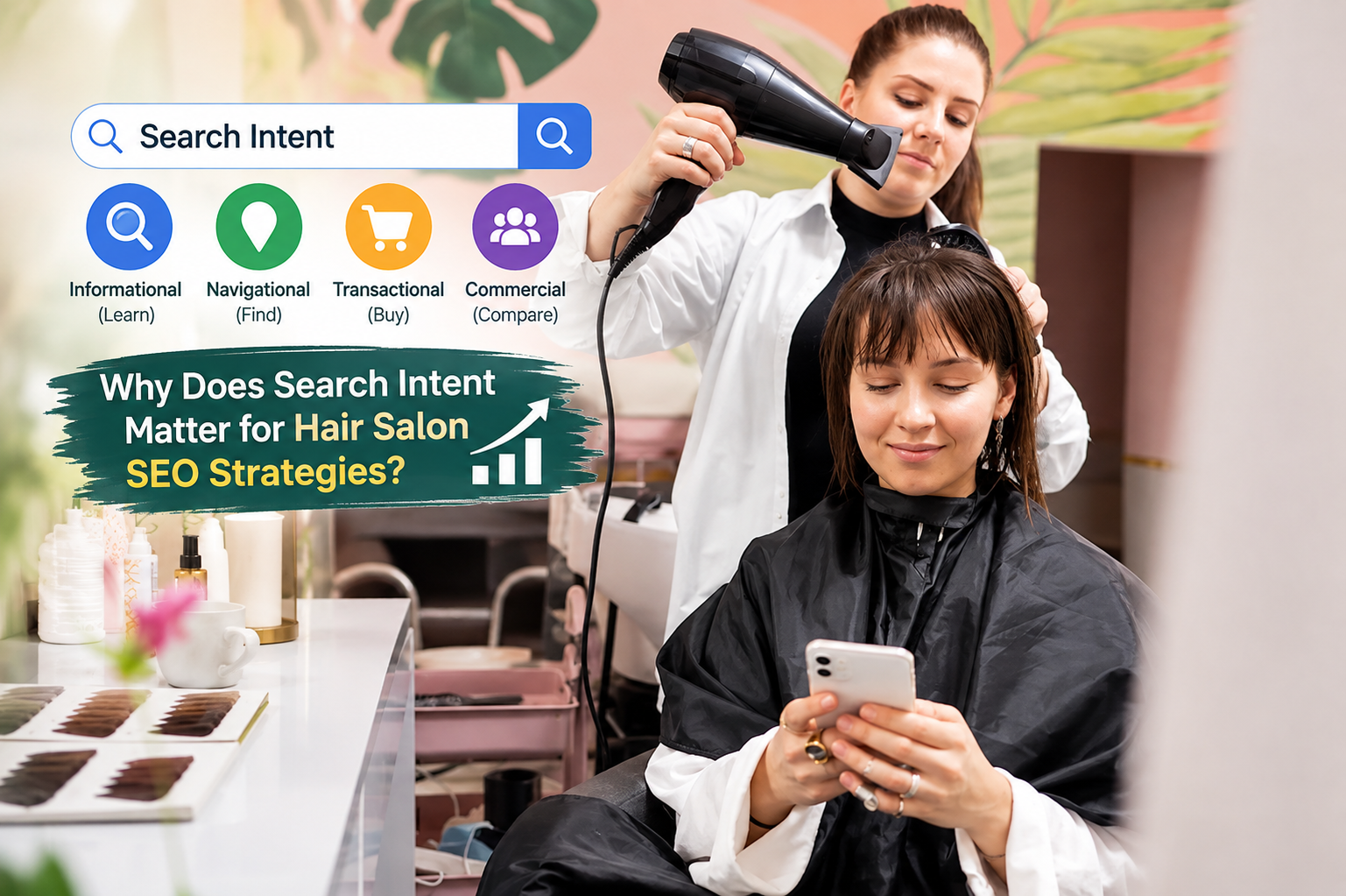
Search intent is the underlying purpose of a user’s search. For hair salons, common search intent categories include informational, navigational, commercial, and transactional searches.
Informational searches are performed when people want answers. Examples include “how often should I get a haircut?” or “best hair color for dark hair.” Commercial searches often show that someone is comparing options, such as “best balayage salon near me.” Transactional searches indicate stronger booking intent, such as “book hair coloring appointment.”
Understanding these differences helps salons avoid creating generic content that fails to address what potential clients actually need.
Why Does Search Intent Matter for Hair Salon SEO Strategies?
Search intent matters because search engines aim to provide users with relevant and useful results. When your website content matches the purpose behind a search, visitors are more likely to find the information they need and take meaningful action.
A search-intent-focused strategy can help your salon:
- Target more relevant keywords
- Create useful service and blog content
- Improve the visitor experience
- Attract potential local clients
- Support stronger organic visibility
- Guide visitors toward appointments
- Build trust before a customer contacts the salon
Instead of focusing only on keyword volume, your strategy can focus on whether a search represents an opportunity to connect with the right audience.
How Different Search Intents Influence Salon Content
Each search intent requires a slightly different content approach.
Informational intent: Create educational blogs, guides, FAQs, and hairstyle resources that answer common client questions.
Commercial intent: Build comparison-focused service content, pricing information, testimonials, treatment benefits, and pages explaining why clients might choose your salon.
Transactional intent: Optimize service and booking pages with clear descriptions, calls to action, contact details, location information, and easy appointment options.
Navigational intent: Make sure your brand name, location, services, contact information, and important website pages are easy to find.
This approach makes your website more useful throughout the customer’s decision-making journey.
How Search Intent Supports Local SEO
Local searches are particularly important for hair salons because customers generally want services within a convenient distance. Queries such as “hair salon near me,” “women’s haircut in [city],” or “balayage salon near me” can indicate local purchasing intent.
Your local SEO strategy should therefore provide accurate information about your salon, including services, location, opening hours, contact information, and relevant local references.
Combining search intent with local optimization can help you create pages that address what nearby customers are actually looking for.
Match Keywords With the Right Landing Pages
Choosing keywords is only part of SEO. You also need to place them on pages that satisfy the corresponding intent.
For example, a keyword related to “hair coloring services” should generally lead to a detailed hair coloring service page rather than an unrelated blog post. Similarly, an informational query about maintaining colored hair may be better served by an educational article.
This alignment creates a clearer relationship between the search query, your content, and the visitor’s expectations.
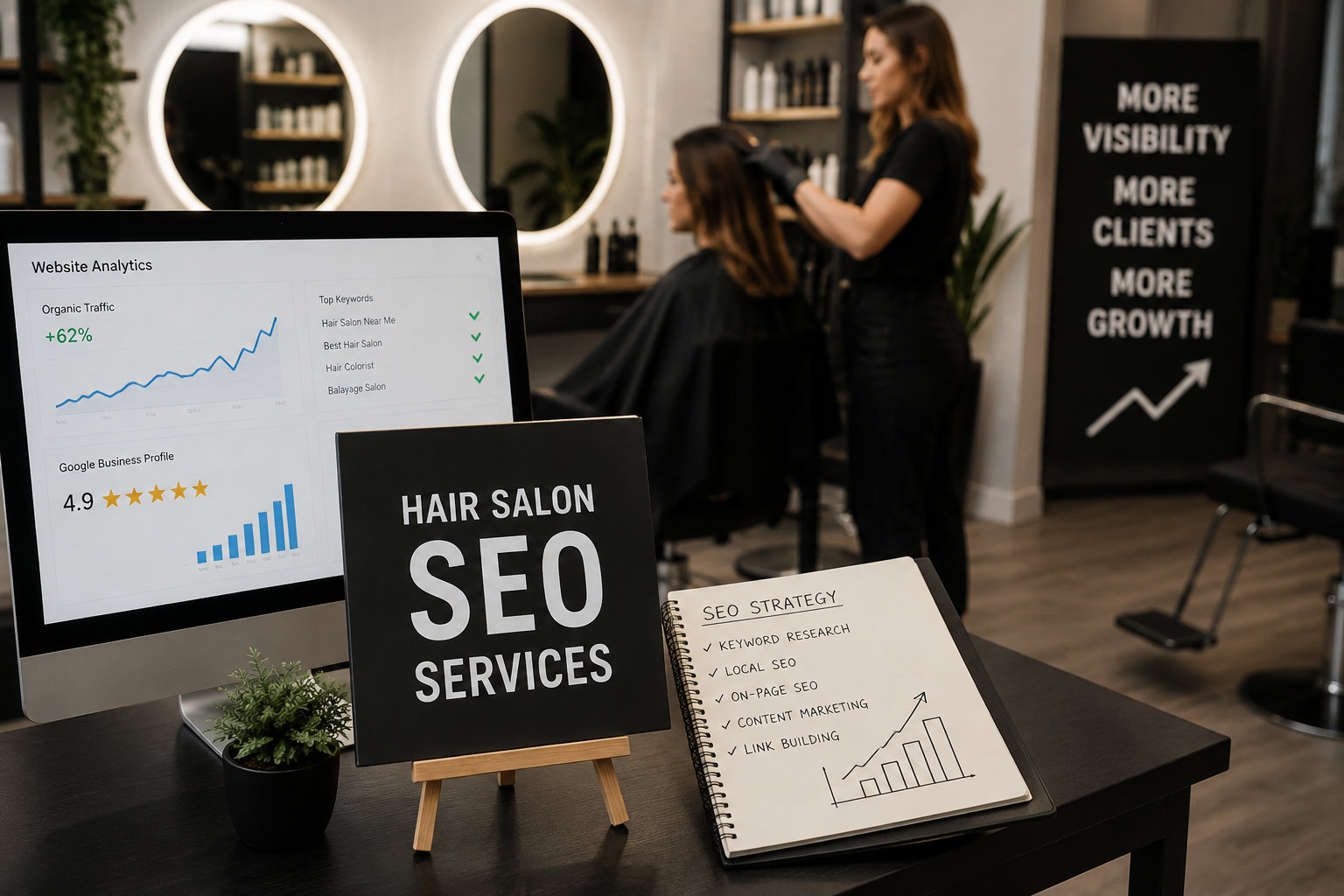
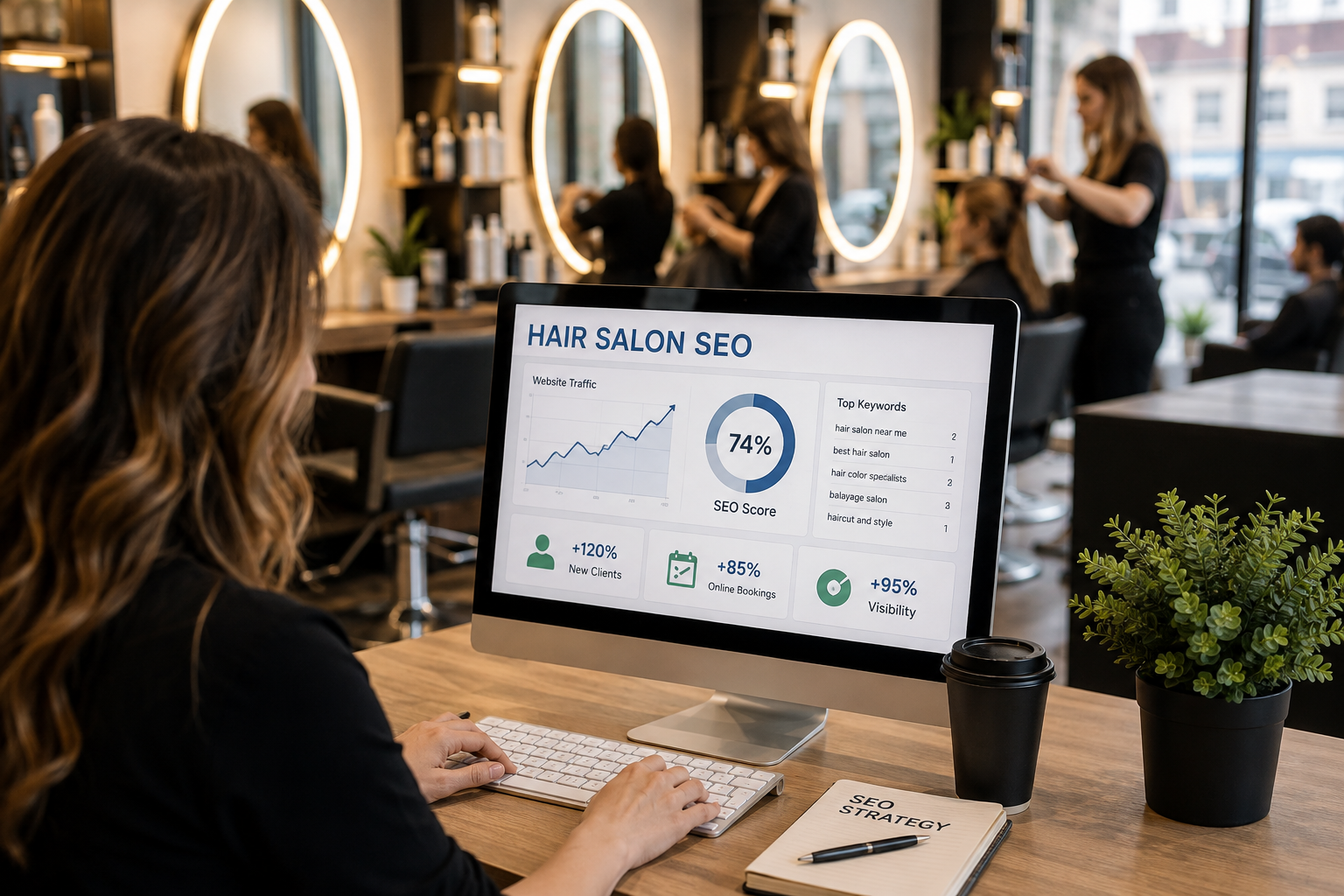
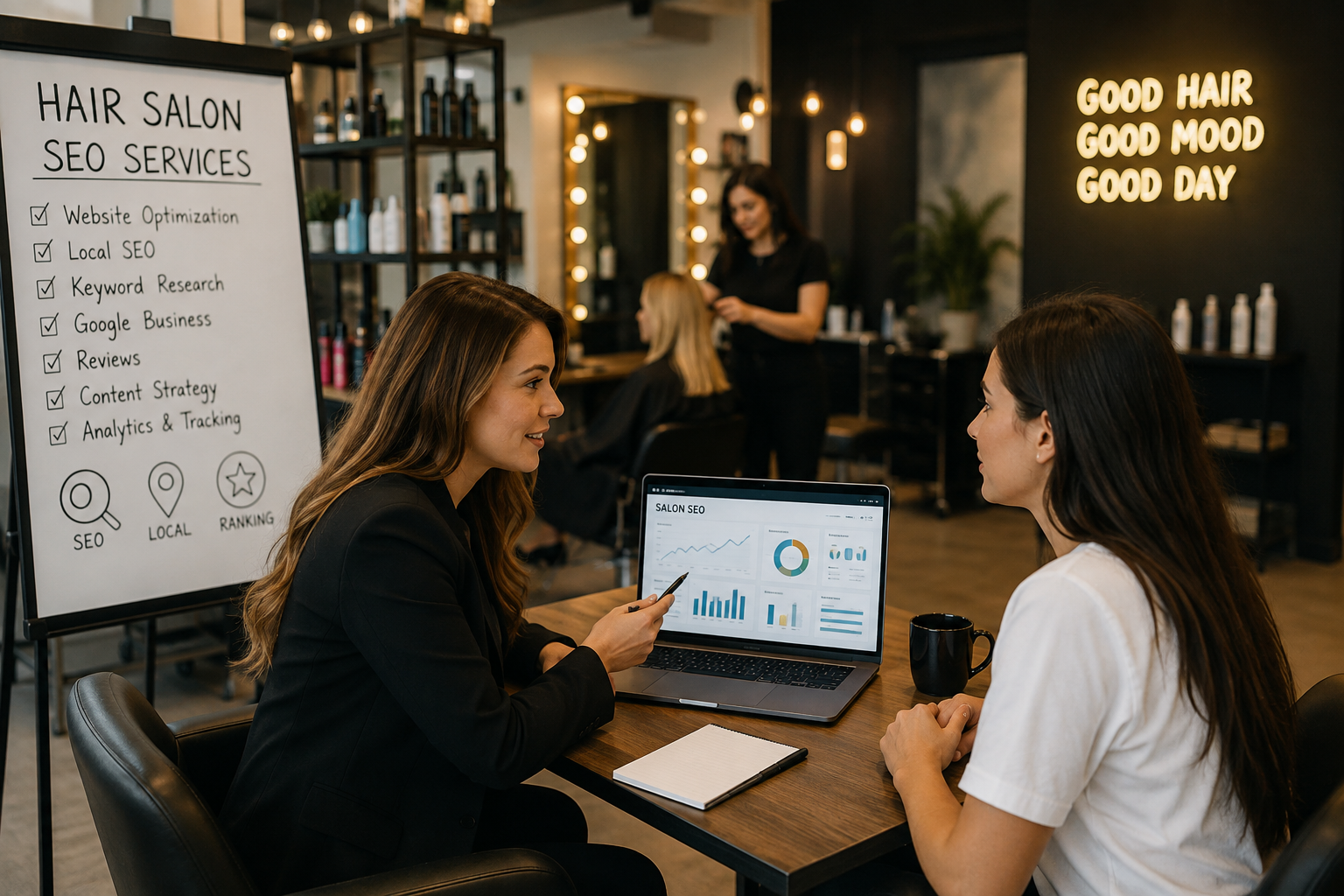
For salons looking to build a comprehensive search strategy, exploring professional SEO solutions designed for hair salon visibility can help connect keyword research, content optimization, local SEO, and conversion-focused website improvements.
Search Intent and AI Search Optimization
Search behavior is increasingly influenced by AI-powered search experiences. This makes it important for salon websites to provide clear, direct, and well-structured information.
AI-, AEO-, and GEO-focused content should answer common questions naturally and provide context around services, locations, pricing considerations, benefits, and booking processes.
Using descriptive headings, concise answers, relevant FAQs, and conversational language can make your content easier for both users and search systems to understand.
For example, instead of simply targeting “hair salon SEO,” a page can answer questions such as:
- What SEO strategies help a hair salon attract local clients?
- How can a salon improve its Google visibility?
- What keywords should a hair salon target?
- How can local SEO generate appointment enquiries?
Answering specific questions gives your website more opportunities to address different stages of the customer journey.
How Search Intent Can Improve the Customer Journey
A potential client may interact with your website several times before making an appointment. They might first search for hairstyle ideas, then research suitable services, compare salons, read reviews, and eventually look for a booking option.
Your content should support each stage.
An educational article can introduce your brand to a potential client. A service page can explain what you offer. A local landing page can reinforce your presence in a specific area. Testimonials and FAQs can address concerns. Finally, a booking or contact page can provide the next step.
This creates a connected content journey rather than a collection of unrelated pages.
Use FAQs to Address Real Search Questions
Frequently asked questions are especially useful for search-intent optimization because they allow salons to answer specific questions in a straightforward format.
For example, a salon could answer questions about appointment preparation, service duration, hair maintenance, pricing factors, suitability of treatments, and booking procedures.
FAQs should provide genuinely useful information rather than simply repeating keywords. Clear answers can improve website readability while helping visitors find important information quickly.
Turn Search Intent Into More Salon Opportunities
Want to attract people who are actively searching for hair salon services? Build a strategy around relevant search intent, useful content, local visibility, and clear conversion paths. Explore our results-focused strategies for improving hair salon search visibility and create a stronger connection between what potential clients search for and the services your salon provides.
Frequently Asked Questions
What is search intent in SEO?
Search intent is the reason or purpose behind a user’s search query. It helps determine what type of information, service, or action the person is looking for.
Why is search intent important for hair salons?
It helps hair salons create content that matches what potential customers actually want, making their website more relevant and useful for different searches.
What are the main types of search intent?
The main categories are informational, navigational, commercial, and transactional intent. Each represents a different stage of the user’s search journey.
How does search intent help local SEO?
It helps salons target searches that reflect local customer needs, such as finding nearby salons, researching local services, or booking appointments.
Can search intent improve salon bookings?
When pages match high-intent searches and provide clear next steps, they can make it easier for potential clients to move from searching to contacting or booking a salon.
How often should hair salons review search intent?
Search intent should be reviewed periodically as customer behavior, search queries, services, and search-engine experiences evolve. Regular SEO analysis can help keep content relevant.