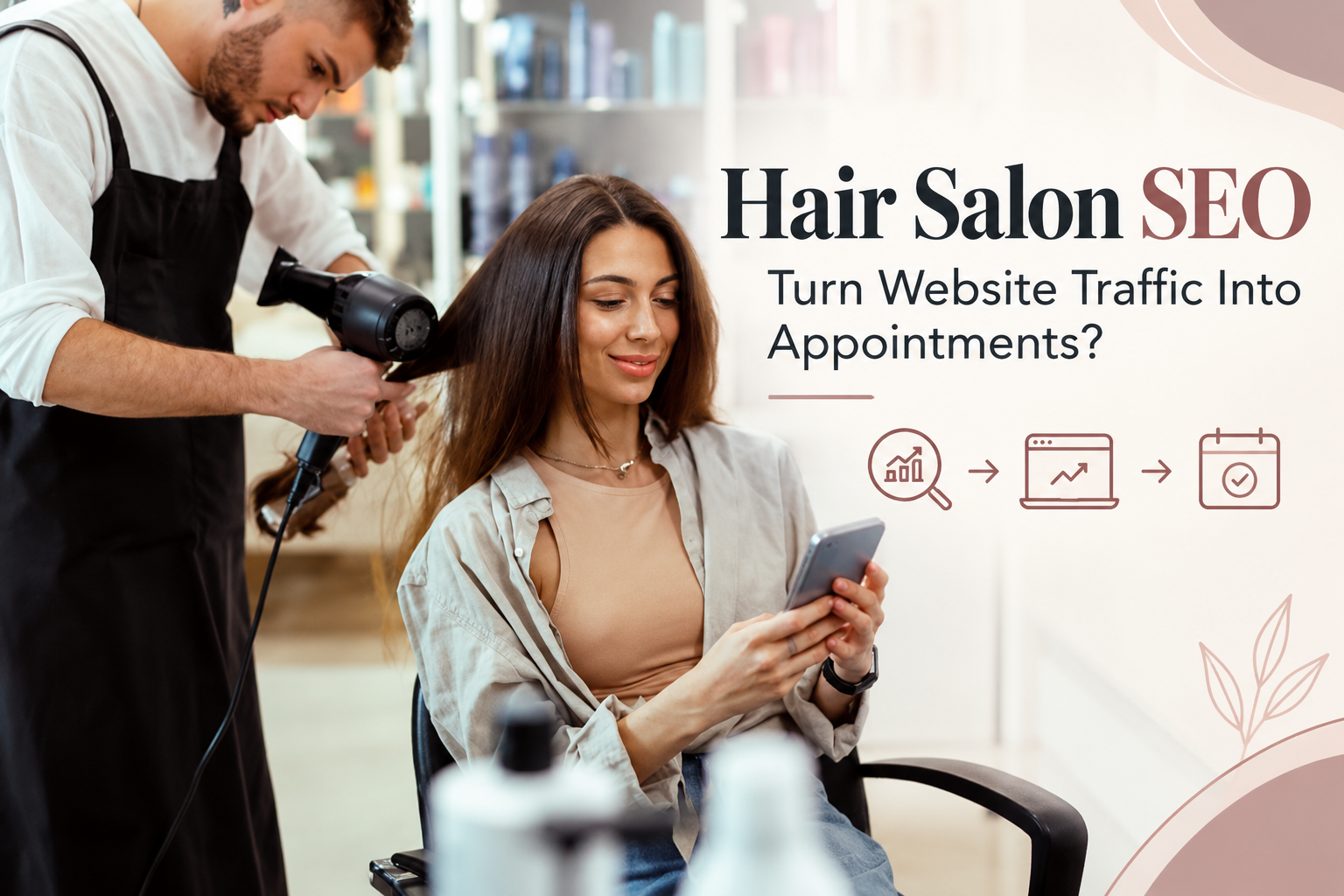
Attracting website visitors is important for any hair salon, but attracting the right visitors is what truly supports business growth. Your website might receive traffic from search engines, yet that traffic may not translate into appointment bookings, service inquiries, or loyal customers. This often happens when search engine optimization (SEO) efforts focus on general visibility instead of reaching people who are actively looking for the services your salon provides.
To improve results, salon owners need to understand their ideal customers, identify relevant search terms, and create website content that matches customer needs. A targeted SEO strategy helps connect your salon with people searching for haircuts, hair coloring, balayage, styling, treatments, and other services in your area.
Why Is Reaching the Right Audience Important for Hair Salon SEO?
Not every website visitor is a potential customer. Someone researching hairstyling techniques for personal interest may visit your blog without intending to book an appointment. In contrast, someone searching for a hair coloring salon nearby may be ready to choose a provider.
The difference lies in search intent. When your SEO strategy aligns with what potential customers want, your website has a better chance of attracting relevant visitors who are more likely to explore your services.
An effective Hair Salon SEO Services strategy focuses on attracting qualified traffic rather than simply increasing visitor numbers. It considers local demand, customer behavior, service preferences, and the information people need before making a booking decision.
Identify Your Ideal Salon Customers
Before optimizing your website, define the customers you want to reach. Consider your salon’s location, services, pricing, experience, and business goals.
For example, a salon specializing in balayage and premium hair coloring may want to attract customers searching for advanced coloring techniques. A family-friendly salon might focus on people looking for affordable haircuts for adults and children.
Ask yourself these questions:
- Which services generate the most revenue for your salon?
- Are your ideal customers local residents, professionals, students, or event attendees?
- What concerns do customers have before booking an appointment?
- Which services distinguish your salon from nearby competitors?
These insights help you create relevant website content and select keywords that reflect genuine customer demand.
Target Keywords That Match Customer Intent
Keywords influence how search engines understand your website and when your pages may appear in search results. However, choosing popular keywords without considering their intent can attract visitors who are unlikely to become customers.
For instance, a broad keyword such as “hairstyles” may attract people looking for inspiration rather than salon services. A more specific phrase such as “balayage salon in [city]” indicates a clearer local service need.
Organize keywords according to different stages of the customer journey:
Informational searches: People want advice, such as how to maintain colored hair or prepare for a haircut.
Commercial searches: People compare options, such as the best hair coloring salons in their area.
Transactional searches: People are ready to take action, such as booking a haircut or scheduling a hair treatment.
Using a balanced keyword strategy helps your salon serve customers at different stages while prioritizing searches that align with your business objectives.
Strengthen Your Local SEO Presence
Hair salons generally serve customers within a particular geographic area, making local SEO essential for reaching the right audience. When people search for salon services nearby, they often want convenient locations, reliable reviews, and clear information about available treatments.
To improve local visibility, maintain an accurate Google Business Profile with your salon’s name, address, phone number, opening hours, website, and service details. Upload genuine photos of your salon and work, respond professionally to reviews, and keep your information updated.
Your website should also include location-specific service pages where appropriate. For example, a salon serving multiple neighborhoods may create useful pages describing the services available in each area.
Avoid creating numerous nearly identical location pages solely to target different keywords. Each page should provide meaningful, accurate information that helps customers make informed decisions.
Create Content That Answers Real Customer Questions
Your website content should reflect the questions and concerns customers have before choosing a salon. Useful content can attract relevant visitors, demonstrate your expertise, and help potential clients understand your services.
Consider publishing articles about:
- How to maintain balayage between salon visits.
- What to consider before choosing a hair color.
- How often customers should schedule a haircut.
- Which hair treatments suit different hair concerns.
- How to prepare for bridal hairstyling appointments.
Include relevant service links within these articles so readers can move naturally from learning about a topic to exploring a suitable treatment.
Make Your Website Easy to Use and Book From
Even if your website attracts the right audience, a confusing user experience can prevent visitors from becoming customers. People should be able to find service details, understand your offerings, and book appointments without unnecessary effort.
Start by checking that your website works smoothly on mobile devices. Many potential customers search for salons using their smartphones, so pages should load quickly, text should be easy to read, and contact details should be accessible.
Make sure each important service page includes:
- A clear description of the treatment.
- Relevant information about pricing or consultations.
- High-quality, authentic photos where appropriate.
- Customer testimonials or review links.
- A visible appointment-booking button or contact option.
Track how visitors interact with these elements. If people frequently visit a service page but leave without booking, review the page’s clarity, relevance, and booking process.
Use Analytics to Measure Audience Quality
SEO performance should be evaluated using more than total website traffic. Analytics tools can help you understand whether your website attracts visitors who engage with your content and take meaningful actions.
Monitor metrics such as organic search traffic, landing-page performance, appointment inquiries, booking-button clicks, and conversion rates. Review the search queries that bring visitors to your website and compare the performance of different service pages.
For example, if a blog post receives substantial traffic but few visitors explore your salon’s services, consider adding relevant internal links and a clear next step. If a local service page generates appointment inquiries, investigate which keywords and content elements contribute to its performance.
For a more focused strategy, explore SEO solutions designed to help hair salons attract relevant local customers. The right approach combines keyword research, local optimization, useful content, and performance tracking to support sustainable growth.
Avoid SEO Practices That Attract the Wrong Visitors
Several common mistakes can reduce the effectiveness of your SEO efforts. Targeting unrelated high-volume keywords, publishing thin content, and creating pages for locations your salon does not serve can attract irrelevant traffic or weaken customer trust.
Keyword stuffing is another problem. Repeating the same phrase excessively makes content difficult to read and does not guarantee better rankings.
Instead, focus on relevant search terms, accurate service information, natural language, and a consistent website structure. Review your strategy regularly as customer preferences, local competition, and search behavior change.
A well-executed Hair Salon SEO Services plan should support your business goals while helping customers find accurate information and choose the services that meet their needs.
Frequently Asked Questions
How can I tell whether my hair salon SEO is reaching the right audience?
Review the search queries bringing visitors to your website, the locations they come from, the pages they visit, and the actions they take. Relevant traffic, service inquiries, and appointment bookings can indicate that your SEO efforts are reaching potential customers.
Which keywords should hair salons target?
Focus on keywords related to your services, location, and customer needs. Examples include “hair salon in [city],” “balayage specialist near me,” and “bridal hairstyling services.” Choose phrases that accurately reflect the services you offer.
Does local SEO help attract more salon customers?
Yes. Local SEO can improve your visibility for relevant geographic searches and help potential customers discover your salon. An accurate Google Business Profile, useful location-specific content, and genuine customer reviews can support local visibility.
Why does my salon website receive traffic but few bookings?
Possible reasons include mismatched search intent, unclear service descriptions, limited pricing information, poor mobile usability, slow loading times, or a complicated booking process. Reviewing user behavior and conversion data can help identify the main issues.
How often should I review my salon SEO strategy?
Review important performance metrics monthly and conduct a more detailed assessment every few months. This allows you to identify changes in search visibility, customer behavior, keyword performance, and appointment inquiries.
Can professional SEO services help my salon reach better customers?
Professional SEO support can help identify relevant keywords, improve local visibility, optimize service pages, and measure results. However, outcomes depend on competition, website quality, implementation, and other marketing factors.
Conclusion
Reaching the right audience is more valuable than attracting website visitors who have little interest in your salon’s services. By understanding customer intent, targeting relevant keywords, strengthening local SEO, and creating helpful content, you can build a website that connects with potential clients more effectively.
Regular performance analysis and a convenient booking experience can further improve your chances of turning relevant traffic into appointments. If you want guidance on improving your salon’s search visibility and attracting qualified customers, contact a team for personalized hair salon SEO guidance.
With consistent optimization and a customer-focused strategy, Hair Salon SEO Services can help your salon build a stronger online presence and create more opportunities for long-term business growth.